Choose the right curtain heading for your made to measure linen curtains.
The heading is the top of your curtain: it shapes the folds, determines how the curtain hangs and connects it to your pole or track. Compare our seven heading styles below to find a finish that suits your room and your curtain fitting.
Before you choose: check your pole or track first. Pencil pleat, pinch pleat and inverted pleat use hooks; eyelets slide directly onto a pole; wave headings need a compatible wave system. The white curtain illustrations show the construction of each style; your chosen fabric and lining will affect the final drape.
Pencil Pleat
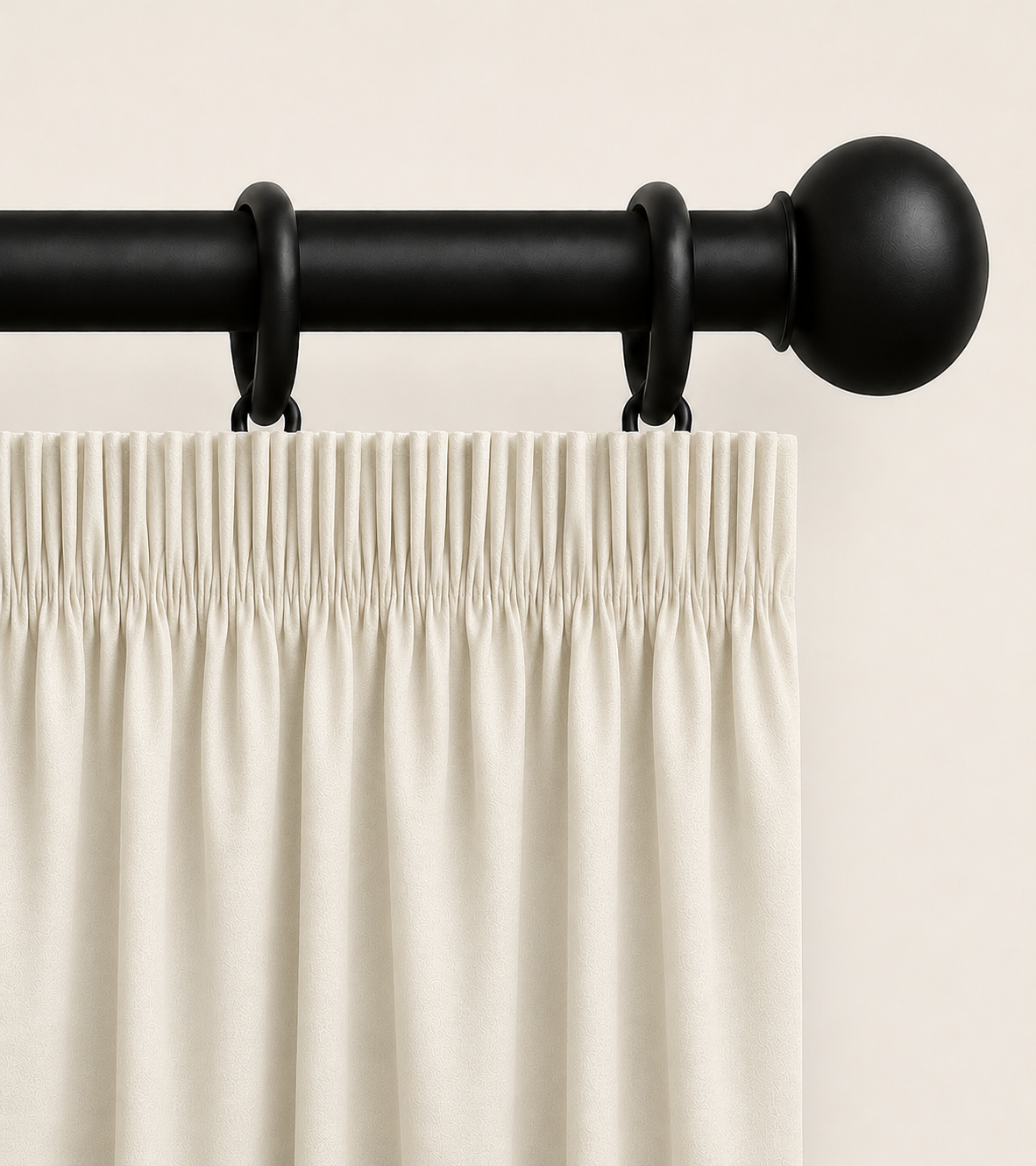
Soft, closely gathered folds give this heading its name: the narrow pleats resemble a row of pencils. The gathered top creates a relaxed, versatile finish for linen curtains in both traditional and contemporary rooms.
The heading tape is gathered with cords to distribute the folds evenly across the curtain. Hooks attach the curtain to track gliders or to rings on a curtain pole.
Best for: A classic, softly gathered look with flexibility when arranging the pleats.
Fitting: Suitable curtain tracks or poles with rings.
Wave Heading
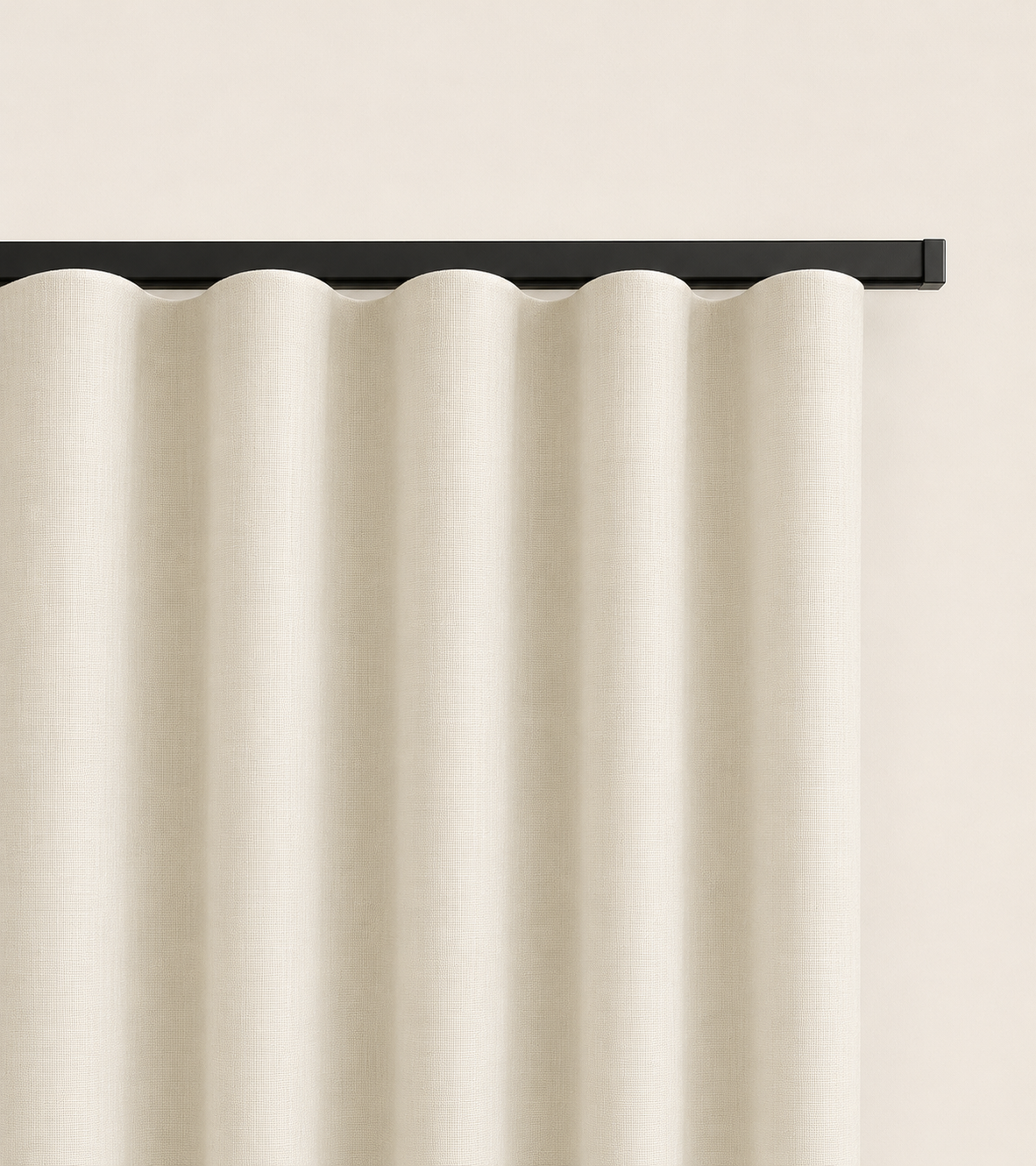
Wave curtains fall into smooth, continuous S-shaped folds. The understated top keeps attention on the fabric and creates a clean, flowing line, particularly suited to modern living rooms and wide windows.
A compatible wave track and its spaced gliders control the folds so that the fabric hangs in an even wave. Allow room in front of and behind the track for the folds, and space at the sides for the curtains when open.
Best for: A contemporary, uncluttered finish with regular folds.
Fitting: A compatible wave curtain track and glider system; an ordinary pole with rings does not create the same effect.
Triple Pinch Pleat (Tape)
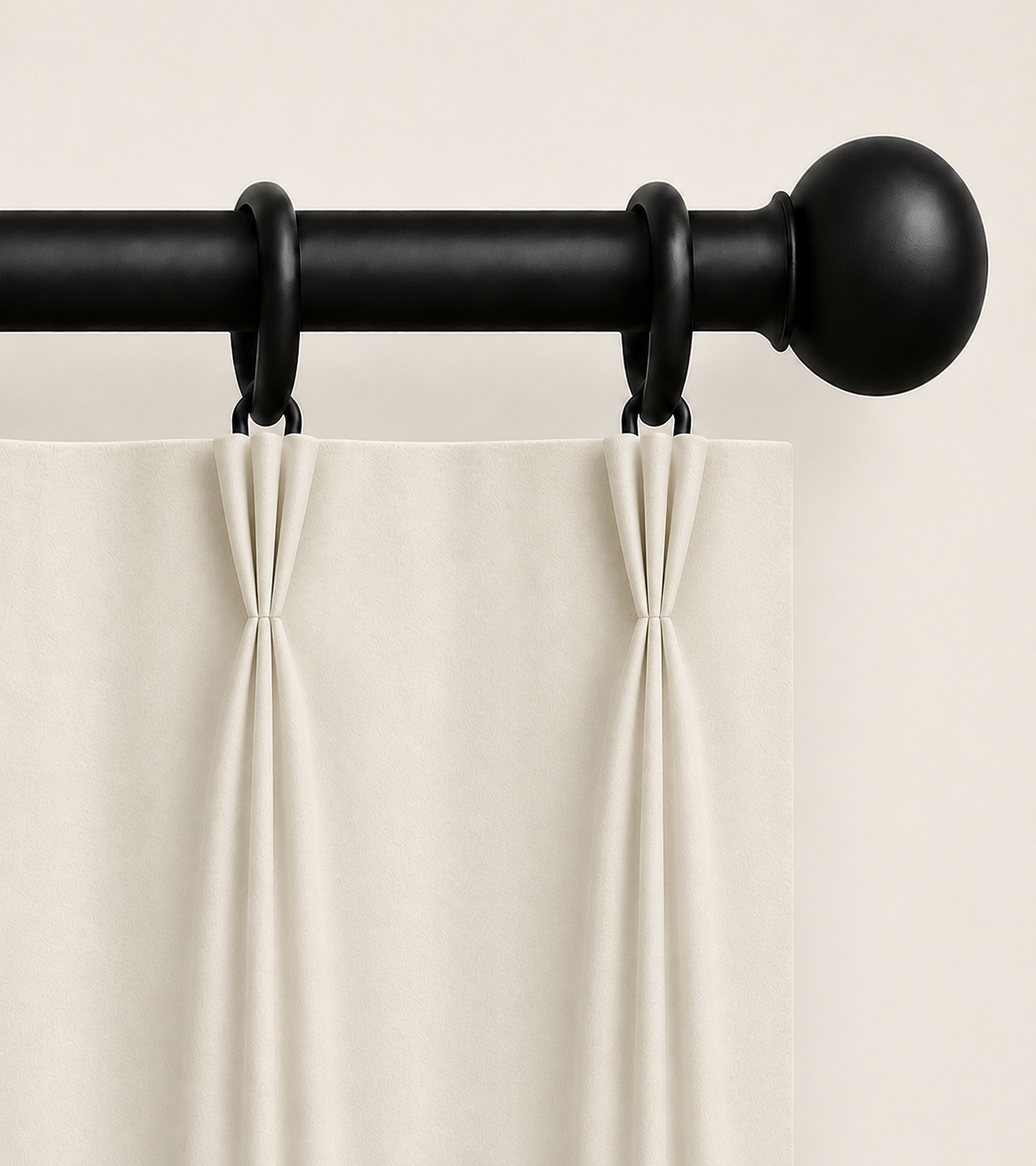
Groups of three small folds create a decorative, regular pattern across the top of the curtain. This version uses a specialist heading tape to form the triple pleats, giving a neat alternative to the hand-made heading.
The pleats are shaped using the tape and its compatible hooks. The shorter gathered detail gives a different finish from the deeper, individually sewn pleats in our hand-made option.
Best for: A traditional triple-pleat appearance made with heading tape.
Fitting: Suitable curtain tracks or poles with rings and compatible hooks.
Eyelet
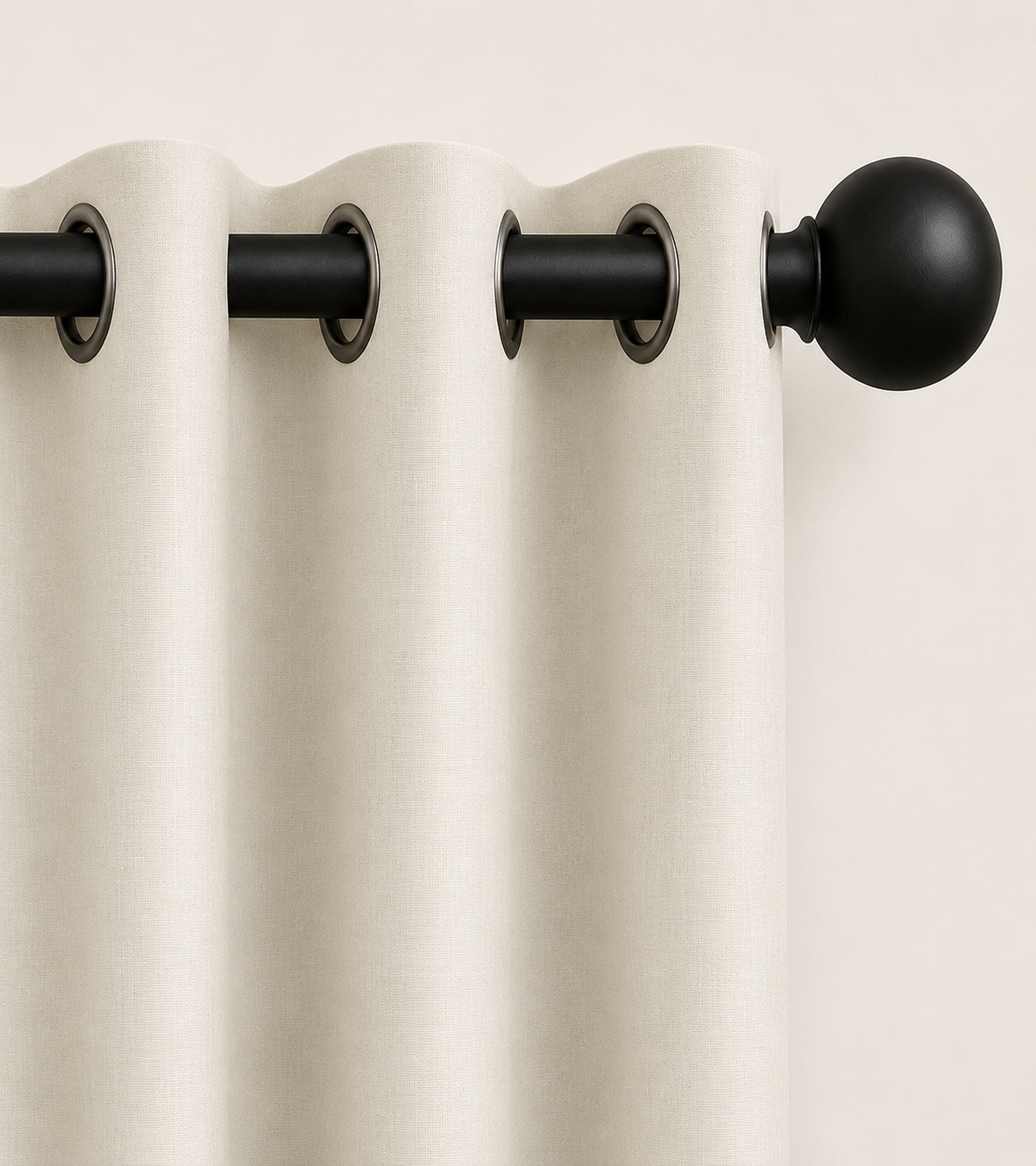
Metal rings set into the top of the curtain slide directly onto a pole. The fabric forms broad folds, with a small amount of fabric visible above the pole for a simple, contemporary finish.
The pole passes through the eyelets, so separate curtain rings are not needed. Check the pole diameter, eyelet size, bracket positions and available clearance before ordering.
Best for: A modern look with a visible decorative curtain pole.
Fitting: A compatible curtain pole. Eyelet curtains do not hang from a standard curtain track.
Double Pinch Pleat (Hand-made)
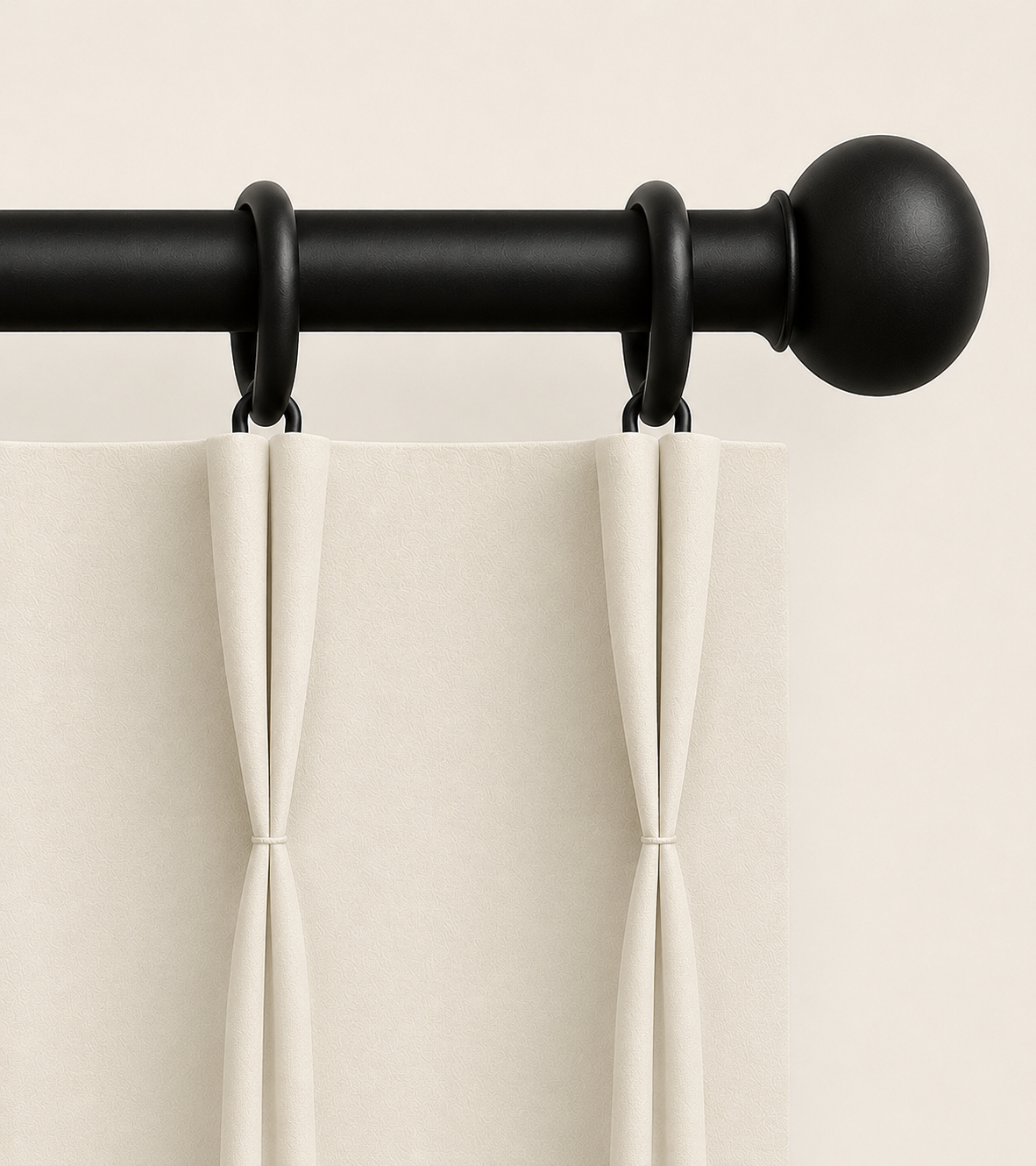
Two folds are brought together and sewn into each pleat. The shaped top opens into soft folds below, giving linen curtains a tailored finish that feels elegant without being overly formal.
Each pleat is sewn in place by hand, rather than gathered with heading tape. This is a fixed heading: the finished pleated width is made to suit the specified fitting and cannot be adjusted by pulling cords.
Best for: A balanced, tailored look for classic or contemporary interiors.
Fitting: Suitable curtain tracks or poles with rings, using appropriate curtain hooks.
Triple Pinch Pleat (Hand-made)
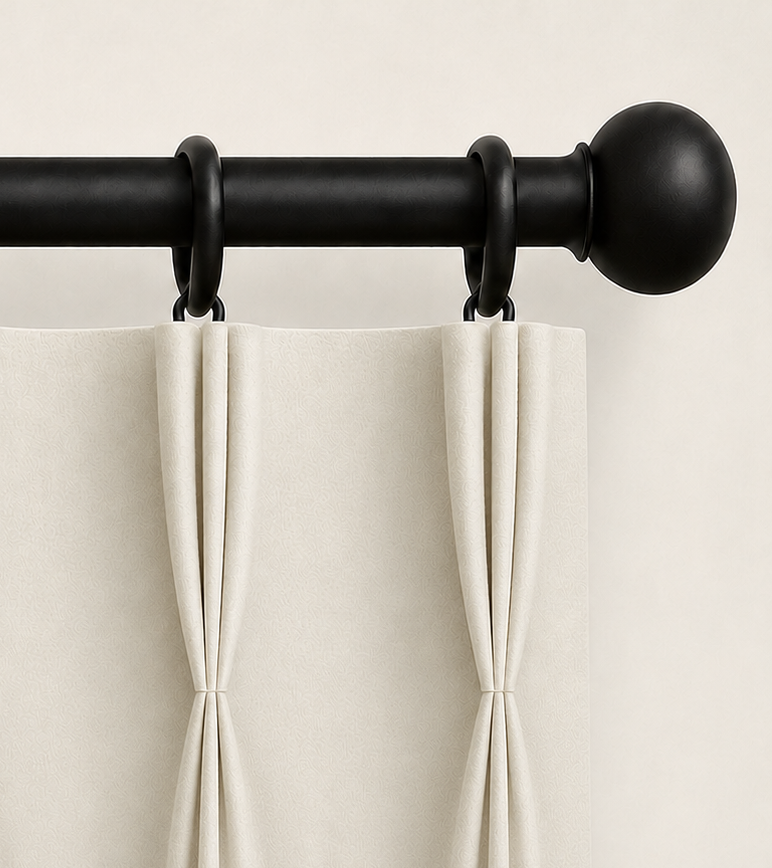
Three folds are brought together in each individually sewn pleat to create a sculpted, decorative top. Also known as a French pleat, this style gives a classic, formal finish with clearly defined folds below the heading.
The pleats are permanently sewn by hand. Unlike the tape version, the depth and shape are created through the construction of each pleat. The finished pleated width is fixed, so accurate fitting measurements matter.
Best for: A traditional, carefully tailored finish for living rooms, dining rooms and bedrooms.
Fitting: Suitable curtain tracks or poles with rings, using appropriate curtain hooks.
Inverted Pleat / Inverted Box Pleat
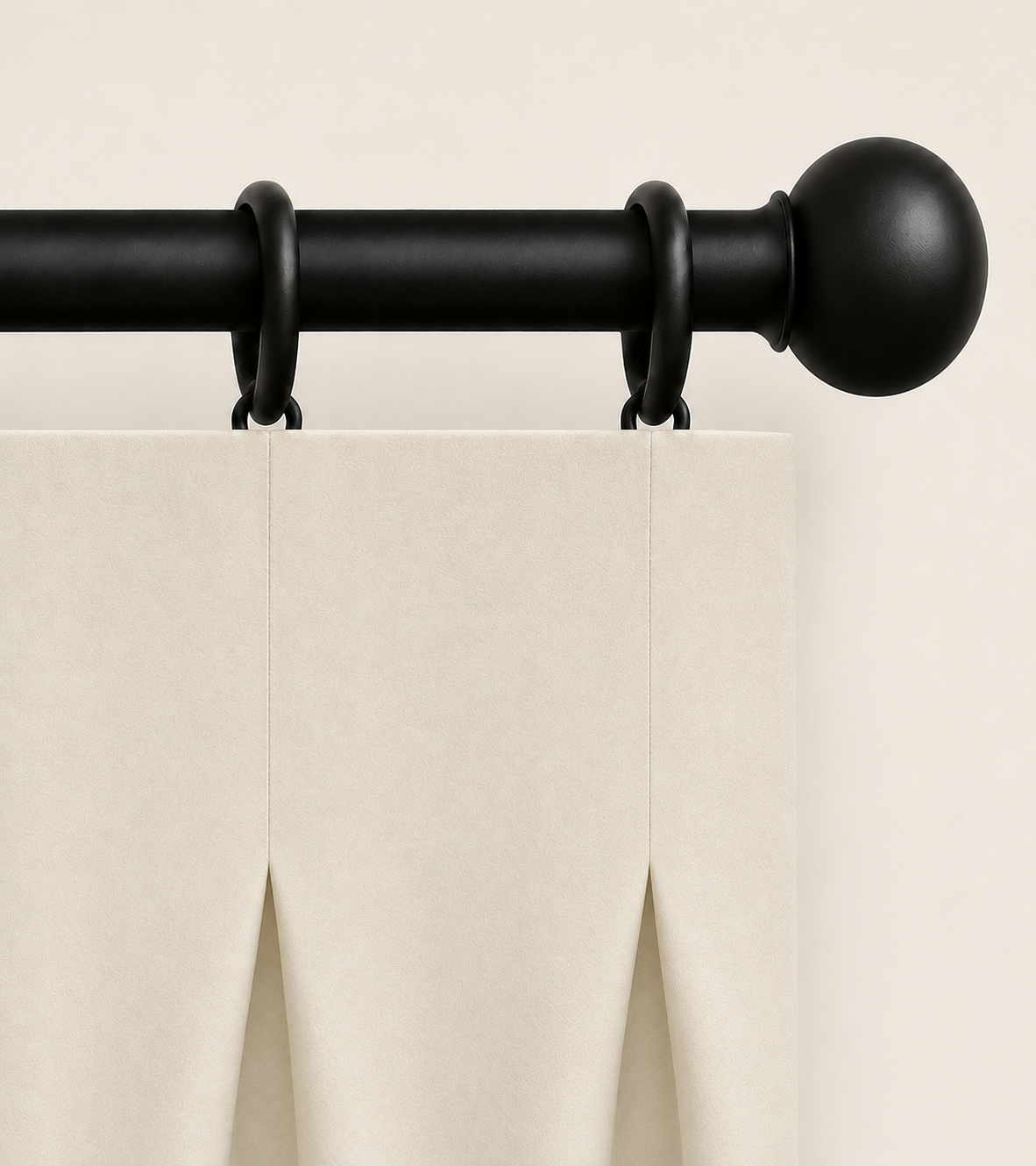
The folds turn towards the back of the curtain, leaving a smooth, flat face at the top. The longer stitched sections open into fuller folds below, creating an architectural finish with less visible gathering across the heading.
The pleats are sewn in position and the finished heading width is fixed. Allow space for the folds behind the top of the curtain and check how the curtains will sit against the fitting when drawn back.
Best for: A clean, structured top with a restrained, tailored appearance.
Fitting: Suitable curtain tracks or poles with rings and appropriate hooks; check clearance for the rear-facing folds.
How to choose your curtain heading
For a soft, gathered finish, choose pencil pleat. For a more defined, tailored top, compare double pinch, triple pinch and inverted pleat. For a contemporary look, consider eyelets on a pole or wave curtains on a compatible track.
Choose your heading before taking the final drop measurement, as the hanging point differs between fittings and heading styles. Measure the pole or track rather than the window itself, and follow our curtain measuring guide for the measurements to enter. Do not add extra width for fullness unless the measuring instructions ask you to.
Heading style and lining are separate choices. Cotton lining, blackout lining and interlining affect weight and drape; blackout lining does not prevent light entering around the sides or top of a curtain.
Need help with your heading style?
If you have a bay window, an existing track, an unusually shaped window or limited space for the curtains when open, contact Grace & Goldney with a photograph and your fitting measurements before ordering. We can help you check the appropriate heading and fitting combination.
Explore made to measure linen curtains